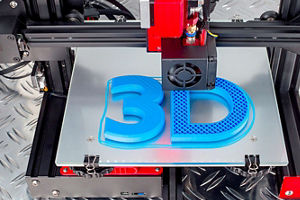

3D printing is one of the most dynamic technologies in the polymer processing landscape nowadays, capable of redefining production models, supply chains, and design approaches. In this context, the use of plastic pellets and filaments, including styrenic materials, represents a key enabling factor for flexible, high-performance solutions aligned with the needs of an industry increasingly focused on customization and efficiency.
For industry operators and professionals, choosing between filament and pellet is not simply a process-related matter, but a strategic lever. Filaments ensure ease of use, control, and repeatability, making them ideal for advanced prototyping and small-scale production applications. Pellets, on the other hand, can be used in direct or hybrid printing systems, enabling lower raw material costs and more direct access to the same polymers already used in traditional industrial processes.
In this scenario, Versalis Research plays a decisive role in the development of advanced materials specifically designed for additive manufacturing. The optimization of the rheological, mechanical, and thermal properties of polymers, together with compound customization, makes it possible to meet the increasingly specific application requirements of different industrial sectors.
One of the areas where 3D printing can express its full potential is the medical sector. The possibility of producing customized devices such as prosthetics, orthotics, and anatomical models for surgical planning represents a paradigm shift in patient care. The use of human body biocompatible polymers, combined with the precision of additive manufacturing processes, enables tailor-made solutions that improve clinical effectiveness while reducing production times and costs.
3D printing has also become widespread in the furniture and design industries. Designers and companies leverage the geometric freedom offered by additive manufacturing to create complex, customizable objects that are often impossible to produce using traditional technologies. The use of filaments and pellets makes it possible to explore new textures, lattice structures, and material combinations, paving the way for an innovative design language that combines aesthetics, functionality, and sustainability. In addition, on-demand production reduces waste and enables more efficient inventory management.
The convergence of advanced polymer materials and 3D printing technologies is therefore redefining the role of plastics, transforming them from simple raw materials into enablers of innovation. For industry operators, the challenge is no longer simply adopting the technology, but strategically integrating it into production processes, leveraging the opportunities offered by filaments and pellets to develop high value-added applications.
In this evolution, research and development of new polymers will continue to play a central role, supporting the growth of 3D printing toward increasingly sophisticated and more environmentally sustainable applications.
To support this technological evolution, we offer a wide portfolio of materials specifically developed for additive manufacturing under the Impressio® brand.
In particular, the Impressio® portfolio includes numerous grades of styrenic polymers, as well as recycled-content and bio-attributed materials belonging respectively to the Versalis Revive® product family and the Balance® product family, designed to ensure optimal performance in both filament- and pellet-based 3D printing processes. These materials are the result of careful formulation activities aimed at combining processability, thermal stability, and mechanical properties, enabling operators to effectively meet the requirements of technical, medical, and design applications.